
Key Takeaways
| Topic | What You’ll Learn |
|---|---|
| Getting Started | Step-by-step guidance on how to begin the DASH diet safely and effectively. |
| Foods to Eat and Avoid | A clear list of DASH-approved foods, foods to limit, and foods to replace for better blood pressure control. |
| Personalized Adaptations | How to adjust the DASH plan for vegan, vegetarian, kosher, halal, or gluten-free lifestyles. |
| Practical Tips | Smart grocery swaps, meal prep advice, and portion control strategies. |
| Common Mistakes | The most frequent beginner missteps — and how to avoid them. |
| When to See Your Doctor | How to coordinate the DASH plan with your medications and medical care. |
Turn DASH principles into everyday habits. OneMed Clinic’s care team can help you personalize your plan and stay motivated with professional support.
Download the DASH diet plan & handout PDF
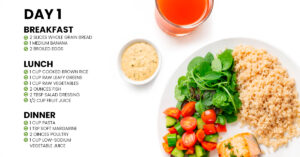
Free DASH Diet Meal Plan: Bulid a menu, download PDF, & print
If your doctor has asked you to consider the DASH diet, or if you’ve heard about it and want to give it a try, this guide will help you get started with confidence. The DASH (Dietary Approaches to Stop Hypertension) plan isn’t just another diet; it’s a lifestyle designed to lower blood pressure, protect your heart, and boost your overall well-being.
At OneMed Clinic in Lake Nona, Orlando, we often remind our patients that success with DASH doesn’t come from perfection; it comes from consistency. The key is learning how to make small, sustainable changes that fit your daily routine, your preferences, and even your culture.
Let’s walk through how to turn the DASH diet from an idea into a personal plan you can actually enjoy —one meal, one day, one success at a time.
How To Start The DASH Diet
1. Discuss the Diet and Your Medications with Your Doctor
At OneMed, your safety is our priority, so before making any dietary changes, it is important that you speak with your doctor first. Some medications for blood pressure or heart conditions may interact with certain nutrients or changes in sodium intake. Your doctor can help personalize the DASH plan to fit your unique health needs.
2. Take Time to Learn About the DASH Plan
Understand the basics: recommended servings, sodium limits, and nutrient-rich food groups. The more you know about how the DASH plan works, the easier it will be to make lasting changes.
3. Compare Your Current Eating Habits to the DASH Plan
Keep a simple food log for a few days. Compare your current meals with the DASH diet. Check the intake of sodium, fruit, vegetables, and whole grains. Awareness and understanding what is not working will help you achieve your goals faster.
4. Identify What Needs to Be Swapped or Changed
Be creative, find good replacements for unhealthy foods. For example, start by replacing processed snacks with fruit, choose whole grains over refined ones, and swap empty sugary drinks for water or herbal tea.
5. Break Down the Process into Small, Simple Goals
Changing your diet is a big deal! Small, gradual changes will work best.
For example, add one more serving of vegetables each day, or cook with less salt this week. Each small step brings you closer to a heart-healthy routine.
6. Use a Food Diary to Track Your Eating Habits
Write down not only what you eat but also when and why you eat. This can reveal whether you are eating not really because you are hungry, but because you are stressed or sad. Realizing these patterns can make a big difference in the success of your diet.
7. Find Healthy Foods You Truly Enjoy
The DASH diet doesn’t have to feel restrictive. Experiment with flavors and textures until you find wholesome foods you love! That’s how healthy habits stick.
8. Make Your Favorite Meals DASH-Friendly
You don’t have to give up comfort foods. Try reducing salt, adding extra vegetables, or using herbs and spices for flavor instead of processed sauces.
9. Explore New Recipes
Research and challenge yourself! Look for DASH-friendly recipes that inspire you. Try new foods to add new flavors and new spices. If you don’t like cooking, research meal delivery services for the Dash diet.
10. Try New Foods and Ingredients
Eating the same things all the time can be boring! Add variety to keep your meals exciting. Eating all the colors of the rainbow ensures you’re getting a full range of nutrients. Add new fruits, vegetables, and plant-based proteins to your weekly shopping list.
11. Don’t Stress About Imperfect Days
Progress is never linear. If you miss your targets one day, don’t let it derail you. Simply note what happened, and refocus the next day.
12. Learn from Slips and Move Forward
Everyone slips up sometimes; it’s normal and part of the process. Ask yourself what caused it (stress, convenience, cravings), then plan a simple adjustment for next time.
13. Celebrate Your Success
Acknowledge every milestone! Whether it is lower blood pressure readings, better energy, or healthier food choices, celebrating progress keeps you motivated and reinforces long-term success.
Want to learn how the DASH diet works and how it can lower your blood pressure? Read our article: DASH Diet To Lower Blood Pressure
Foods You Can Eat, Limit, and Avoid on the DASH Diet
The DASH diet is flexible, not rigid. It doesn’t eliminate entire food groups; it simply encourages balance and moderation. The goal is to eat more of what your body needs and less of what raises your blood pressure.
Download DASH Food List PDF
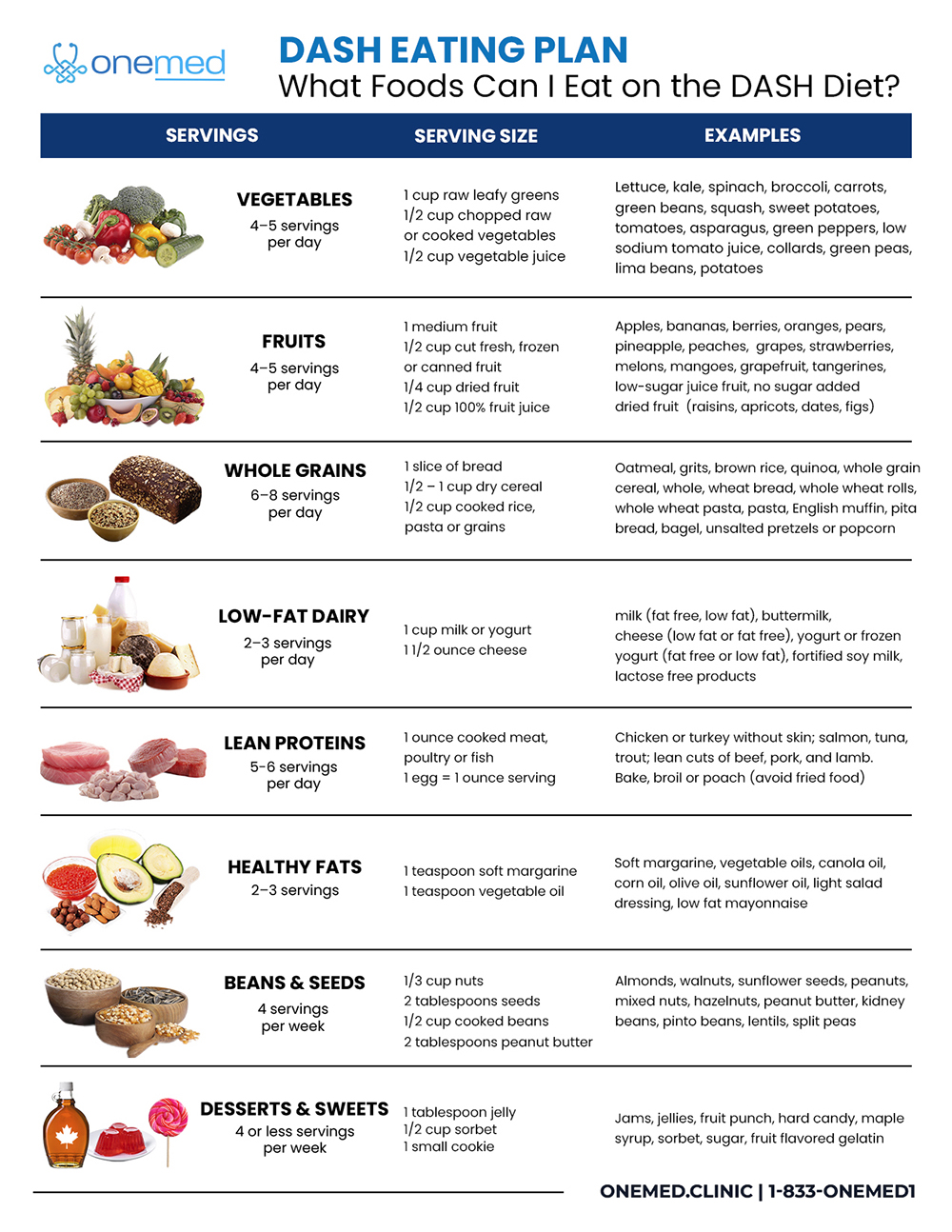
What Foods Can I Eat on the DASH Diet?
Focus on foods rich in potassium, calcium, magnesium, and fiber.
| Food Group | Examples | Recommended Servings (per day) |
|---|---|---|
| Vegetables | Spinach, broccoli, carrots, sweet potatoes | 4–5 servings |
| Fruits | Bananas, apples, berries, oranges | 4–5 servings |
| Whole Grains | Oats, brown rice, whole wheat pasta | 6–8 servings |
| Low-Fat Dairy | Skim milk, yogurt, reduced-fat cheese | 2–3 servings |
| Lean Proteins | Chicken, fish, beans, lentils | 2 or fewer servings (meat), 4–5 weekly (nuts/beans) |
| Healthy Fats | Olive oil, avocado, nuts | 2–3 servings |
💡 OneMed Pro Tip: Choose fresh or frozen produce over canned versions to keep sodium levels low
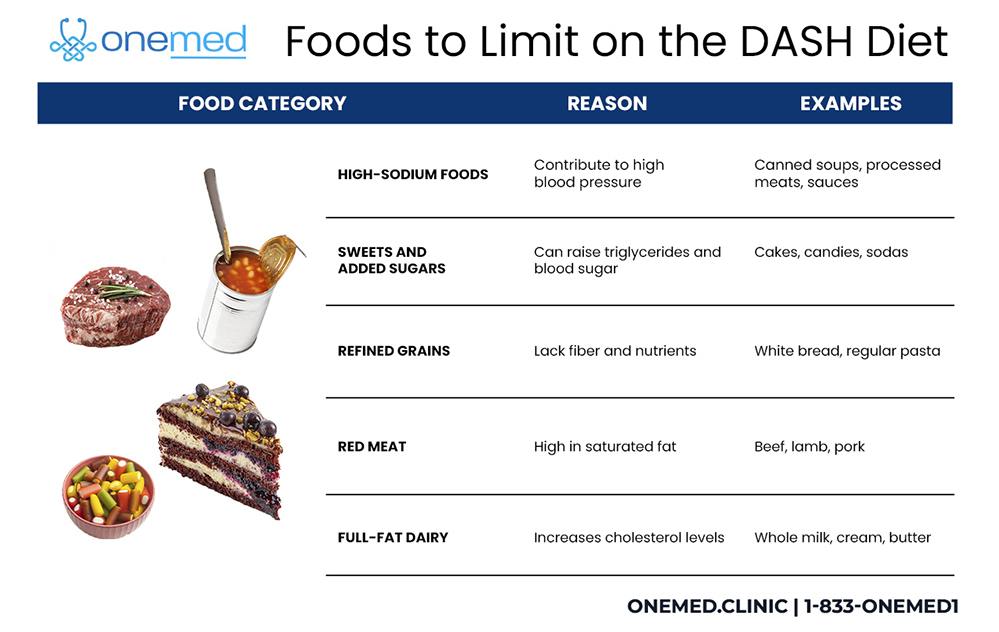
What Foods Should I Limit on the DASH Diet?
You don’t have to eliminate these foods entirely, just enjoy them less often or in smaller portions.
| Food Category | Examples | Reason for Limiting |
|---|---|---|
| High-Sodium Foods | Canned soups, processed meats, sauces | Contribute to high blood pressure |
| Sweets and Added Sugars | Cakes, candies, sodas | Can raise triglycerides and blood sugar |
| Refined Grains | White bread, regular pasta | Lack fiber and nutrients |
| Red Meat | Beef, lamb, pork | High in saturated fat |
| Full-Fat Dairy | Whole milk, cream, butter | Increases cholesterol levels |
Our physicians at OneMed often suggest limiting sodium intake to 1,500–2,300 mg per day, depending on your blood pressure readings.
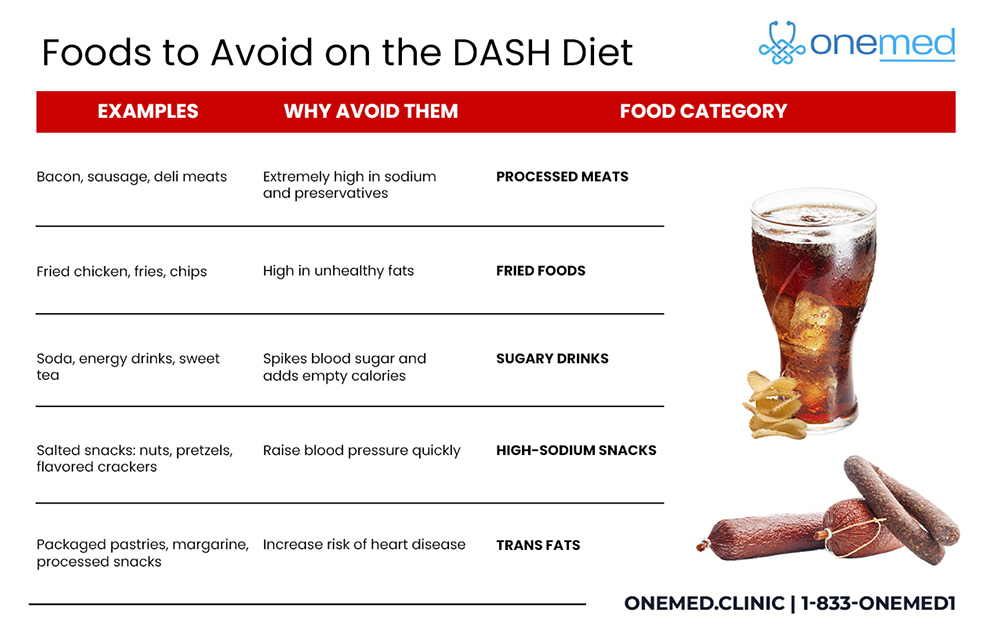
What Foods Do I Avoid on the DASH Diet?
Avoid foods that are heavily processed, high in saturated fat, or full of added sugars.
| Avoid These Foods | Examples | Why Avoid Them |
|---|---|---|
| Processed Meats | Bacon, sausage, deli meats | Extremely high in sodium and preservatives |
| Fried Foods | Fried chicken, fries, chips | High in unhealthy fats |
| Sugary Drinks | Soda, energy drinks, sweet tea | Spikes blood sugar and adds empty calories |
| High-Sodium Snacks | Salted nuts, pretzels, flavored crackers | Raise blood pressure quickly |
| Trans Fats | Packaged pastries, margarine, processed snacks | Increase risk of heart disease |
As we tell our patients, the focus is not on restriction but replacement. Swap processed foods for fresh, homemade alternatives, and your heart and energy levels will thank you.
How to Make the DASH Diet Vegan, Vegetarian, Kosher, Halal, or Gluten-Free
The DASH diet is incredibly flexible, which makes it one of the most inclusive heart-healthy eating plans available. It can be easily adapted for different lifestyles and dietary restrictions, whether you’re vegan, vegetarian, kosher, halal, or gluten-free.
At OneMed Clinic in Lake Nona, Orlando, we often work with patients to personalize the DASH plan to fit their unique needs, cultures, and health goals. With a few thoughtful substitutions, almost anyone can follow DASH successfully.
Can Vegans Follow the DASH Diet?
Yes. The DASH diet can be completely vegan-friendly when planned properly. Since the standard DASH plan includes dairy and sometimes lean meats, vegans will need to replace those with plant-based sources of protein and calcium.
| Nutrient | Typical DASH Source | Vegan Alternative |
|---|---|---|
| Protein | Chicken, fish, eggs | Lentils, tofu, tempeh, chickpeas |
| Calcium | Milk, yogurt, cheese | Fortified soy milk, almond milk, tahini |
| Omega-3s | Fish | Flaxseed, chia seeds, walnuts |
| Iron | Lean meats | Spinach, lentils, fortified cereals |
| Vitamin B12 | Dairy, meat | Supplements or fortified plant milks |
Tip from OneMed physicians: Vegans following the DASH diet should pay special attention to vitamin B12 and calcium intake, which are crucial for energy and cardiovascular health. It’s recommended to track levels and use vitamin supplements when needed.
Can Vegetarians Follow the DASH Diet?
Absolutely. The DASH diet naturally fits into a vegetarian lifestyle, since it already emphasizes fruits, vegetables, whole grains, nuts, and legumes.
Vegetarians can meet protein and nutrient needs through eggs, dairy, beans, and soy products.
| Food Group | Vegetarian Options | Health Benefit |
|---|---|---|
| Protein | Eggs, beans, lentils, tofu | Muscle health, steady energy |
| Dairy | Yogurt, milk, cheese | Provides calcium and vitamin D |
| Whole Grains | Brown rice, quinoa, barley | Boosts fiber and heart health |
| Healthy Fats | Nuts, seeds, olive oil | Improves cholesterol balance |
This version of DASH is one of the easiest to maintain long-term and can significantly reduce the risk of hypertension.
Can Kosher Follow the DASH Diet?
Yes. The DASH diet can be fully compatible with kosher dietary laws. It focuses on clean, minimally processed foods that naturally align with kosher principles.
| DASH Element | Kosher Adaptation |
|---|---|
| Meat and Dairy | Keep them separate according to kosher law |
| Protein Sources | Choose kosher-certified fish, eggs, and poultry |
| Dairy | Use kosher-certified low-fat or fat-free dairy products |
| Processed Foods | Always check for kosher certification labels |
| Cooking Oils | Use kosher-certified olive or canola oils |
At OneMed Clinic, we often help patients integrate cultural and religious food preferences into their nutrition plans, ensuring both heart health and dietary integrity.
Can Halal Follow the DASH Diet?
Yes. The DASH diet works very well with halal dietary practices. Since it emphasizes fresh, whole, unprocessed foods, it naturally aligns with halal principles.
| DASH Element | Halal Adaptation |
|---|---|
| Protein Sources | Choose halal-certified poultry, beef, and fish |
| Dairy | Use halal-certified milk, yogurt, and cheese |
| Avoided Foods | Stay away from pork, alcohol, and non-halal processed meats |
| Cooking Oils | Olive oil and vegetable oils are halal-friendly |
| Flavoring Options | Use herbs, lemon, garlic, and spices instead of alcohol-based marinades |
Practical note: Many halal-certified food brands now carry low-sodium and heart-healthy options that fit perfectly within the DASH framework.
Is the DASH Diet Gluten Free?
The DASH diet is not by default gluten-free, but it can be made 100% gluten-free with simple substitutions. The DASH plan includes many gluten-free foods naturally (like fruits, vegetables, and lean proteins), so it’s easy to adapt if you’re sensitive to gluten or have celiac disease.
| Food Group | Contains Gluten? | Gluten-Free Alternative |
|---|---|---|
| Grains | Wheat, barley, rye | Brown rice, quinoa, millet, oats (certified GF) |
| Snacks | Crackers, cookies, pastries | Rice cakes, air-popped popcorn |
| Breakfast Foods | Pancakes, toast | Gluten-free bread, oatmeal |
| Pasta | Traditional wheat pasta | Lentil or chickpea pasta |
| Sauces | Some soy sauces, dressings | Gluten-free tamari or homemade vinaigrettes |
Important: Always read food labels; some sauces, soups, and seasonings contain hidden gluten.
DASH Diet Tips and Expert Advice From OneMed
1. Getting Comfortable with New Foods
1. Change Gradually
Remember to start small. For example, if you never or very once in a while eat fruit, begin by drinking a glass of 100% fruit juice with lunch instead of soda. Then, once you are used to the juice, add one serving of fruit to your meals or enjoy it as a snack. Gradual changes like the one above are easier to maintain in the long term.
2. Choose Fat-Free or Low-Fat Dairy
Full milk diary is rich and delicious, but a better choice for your heart is to choose:
- skim milk
- low-fat yogurt
- reduced-fat cheese
Low-fat dairy also provides calcium and protein without excess saturated fat or cholesterol.
3. Make Healthy Substitutions
Believe it or not, it is possible to find delicious whole-grain options to swap white bread and pasta to boost fiber and heart health.
If you’re allergic to nuts, use beans or seeds as an alternative protein source.
2. Be Mindful of What You Eat
Read food labels carefully. Look for items low in saturated fat, trans fat, and sodium. The Nutrition Facts panel is your new best friend! It will help you get informed and buy healthier foods at the grocery store.
3. Smart Protein Choices
- Choose Lean Cuts of Meat: Opt for skinless poultry or lean cuts like tenderloin and sirloin.
- Remove Poultry Skin Before Eating: The skin contains most of the saturated fat. Removing it reduces unnecessary calories while making a big difference in your cholesterol levels.
- Enjoy Fish Weekly: Include fish in your meals once or twice a week. Salmon, tuna, sardines, and trout are great sources of heart-healthy omega-3 fatty acids.
- Plan Meatless Meals: Try two or more vegetarian dinners each week. Lentils, beans, tofu, and chickpeas fit beautifully into the DASH plan and add variety to your plate.
4. Healthy Snacking Habits
Select snacks that nourish your body rather than add empty calories.
| Smart DASH-Friendly Snacks | Why They Work |
|---|---|
| Fresh Fruits | Sweet, hydrating, and rich in potassium |
| Raw Vegetables | Low-calorie, high-fiber, and filling |
| Unsalted Nuts | Provide healthy fats and protein |
| Low-Fat Yogurt | Great source of calcium and probiotics |
| Air-Popped Popcorn | Whole grain, high in fiber, low in fat when unsalted |
OneMed Tip: Keep a small portion of healthy snacks on hand throughout the day to avoid buying unhealthy snacks or overeating at mealtimes.
Common Mistakes When Starting the DASH Diet
Even though the DASH diet is simple and flexible, a few common mistakes can keep you from seeing results as quickly as you’d like. Understanding these early on can help you stay on track and avoid unnecessary frustration.
| Common Mistake | Why It Happens | How to Fix It |
|---|---|---|
| Cutting sodium too quickly | A sudden drop can cause dizziness or fatigue, especially if you’re used to high-salt foods. | Gradually reduce salt over a few weeks so your taste buds adjust naturally. |
| Relying on packaged “low-fat” foods | Many are high in sugar or sodium, which undermines blood pressure goals. | Choose fresh, whole foods instead of processed low-fat options. |
| Skipping meals or undereating | Some people assume eating less helps lower BP faster, but it can cause energy dips. | Eat balanced meals with healthy carbs, protein, and fats to maintain energy. |
| Ignoring hydration | Dehydration can increase blood pressure and cause headaches. | Drink water throughout the day, aiming for steady hydration. |
| Overestimating portion sizes | Healthy foods can still lead to overeating if portions are too large. | Use smaller plates and review DASH serving recommendations. |
| Not reading food labels | Hidden sodium and sugars are common in sauces, breads, and condiments. | Check nutrition labels for sodium and added sugar content. |
| Expecting instant results | Blood pressure improvements often appear within weeks, not days. | Be patient; consistency matters more than speed. |
| Skipping follow-ups with your doctor | Blood pressure and medications may need adjusting as your diet changes. | Schedule regular check-ins to track progress safely. |
OneMed Pro tip: Take it slow and steady. The DASH diet works best as a lifelong change, not a temporary fix. Start with realistic adjustments, listen to your body, and stay in touch with your healthcare provider for personalized support.
When to Talk to Your Doctor About the DASH Diet
Before making significant changes to your diet (especially if you have high blood pressure, diabetes, kidney disease, or heart conditions), it’s important to talk to your healthcare provider.
| When to Schedule a Consultation | Why It Matters |
|---|---|
| Before Starting DASH | Your doctor can tailor sodium and calorie goals to your current health status. |
| If You’re on Blood Pressure or Diuretic Medications | These may affect how your body handles potassium, sodium, and hydration. |
| If You Notice Dizziness or Fatigue | Sudden sodium changes can temporarily affect energy levels. |
| If You’re Combining DASH with Weight Loss or Other Diets | Professional guidance ensures nutrient balance and safety. |
| For Long-Term Follow-Up | Regular monitoring helps track improvements and adjust the plan as needed. |
At OneMed Clinic, we believe personalized nutrition works best when combined with professional guidance. If you’re starting the DASH diet or adjusting medications, our physicians can help you set safe, realistic goals and support you every step of the way.
DASH Diet FAQs
Are There Cheat Days on the DASH Diet?
Yes, but in moderation. Occasional indulgences are fine as long as you maintain overall balance. The DASH diet is not about perfection but about creating sustainable habits that support long-term heart health.
Can You Drink Alcohol on the DASH Diet?
Yes, but in moderation. The general recommendation is up to 2 drinks per week.
Excess alcohol can raise blood pressure and interfere with medications, so talk with your doctor about what’s safe for you.
Can You Drink Coffee on the DASH Diet?
Yes, but limit caffeine if it tends to raise your blood pressure. Choose black coffee or coffee with low-fat milk, and avoid sugary creamers or flavored syrups. Herbal teas and decaf are great alternatives.
Can You Drink Wine on the DASH Diet?
Moderate wine consumption is allowed, particularly red wine, which may offer heart-healthy antioxidants. However, balance and portion control are key. Always follow your doctor’s advice if you’re on medication for blood pressure.
Can You Eat Bread on the DASH Diet?
Yes, but choose whole-grain bread instead of white. Whole-grain varieties offer more fiber, magnesium, and potassium, all of which help regulate blood pressure.
Can You Eat Eggs on the DASH Diet?
Yes. Eggs are allowed on the DASH diet in moderation. They’re a good source of protein and essential nutrients. For best results, prepare them boiled or poached rather than fried. Also, keep in mind to limit the added salt and butter when cooking them.
Can You Eat Peanut Butter on the DASH Diet?
Yes, in moderation. Choose unsalted or low-sodium natural peanut butter without added sugar or hydrogenated oils. It provides healthy fats and protein but can be calorie-dense, so keep portions small.
Can You Eat Potatoes on the DASH Diet?
Yes. Potatoes, especially when baked or boiled, are rich in potassium, a key nutrient for controlling blood pressure. Avoid fried or heavily salted versions to stay within sodium limits.
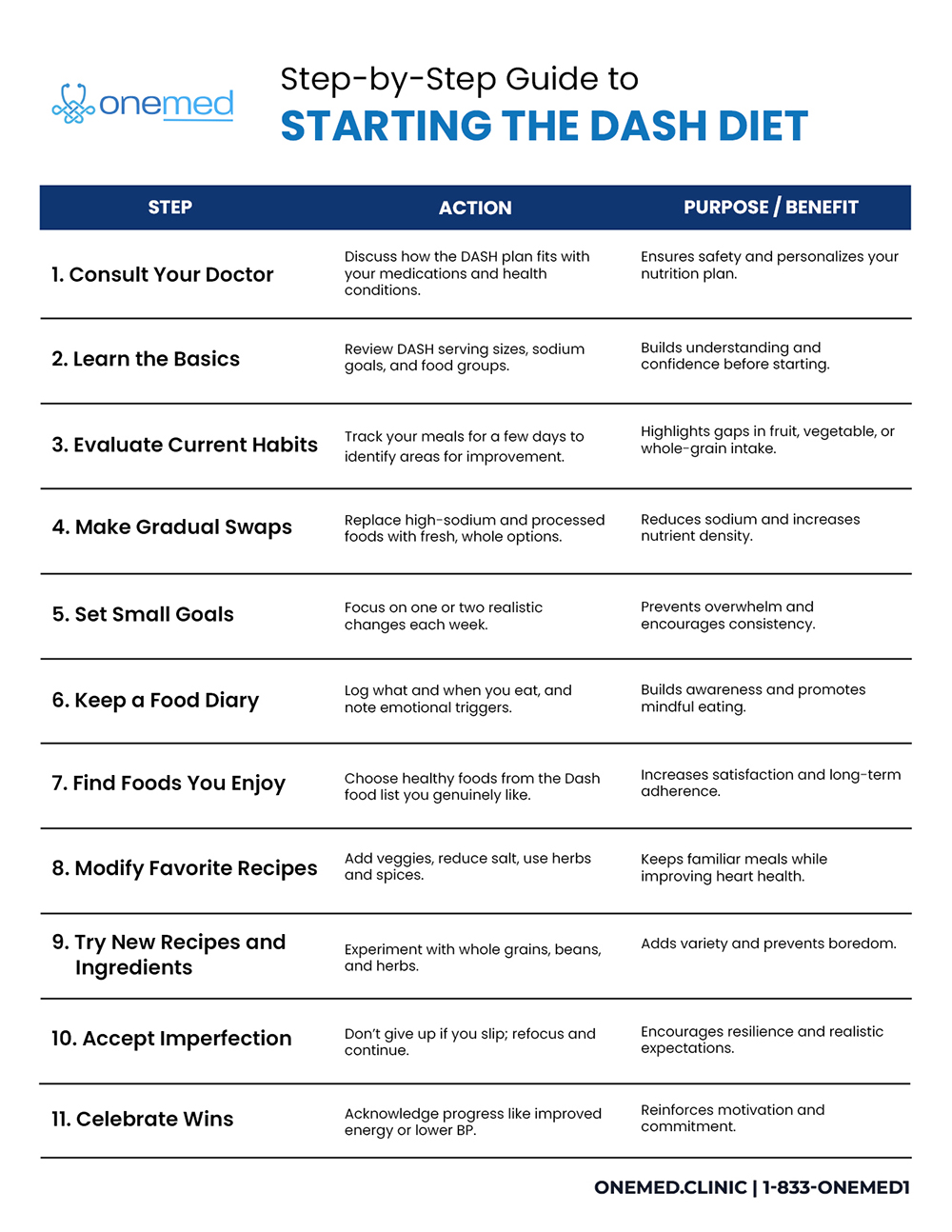
Step-by-Step Guide to Starting the DASH Diet
| Step | Action | Purpose / Benefit |
|---|---|---|
| 1. Consult Your Doctor | Discuss how the DASH plan fits with your medications and health conditions. | Ensures safety and personalizes your nutrition plan. |
| 2. Learn the Basics | Review DASH serving sizes, sodium goals, and food groups. | Builds understanding and confidence before starting. |
| 3. Evaluate Current Habits | Track your meals for a few days to identify areas for improvement. | Highlights gaps in fruit, vegetable, or whole-grain intake. |
| 4. Make Gradual Swaps | Replace high-sodium and processed foods with fresh, whole options. | Reduces sodium and increases nutrient density. |
| 5. Set Small Goals | Focus on one or two realistic changes each week. | Prevents overwhelm and encourages consistency. |
| 6. Keep a Food Diary | Log what and when you eat, and note emotional triggers. | Builds awareness and promotes mindful eating. |
| 7. Find Foods You Enjoy | Choose healthy foods you genuinely like. | Increases satisfaction and long-term adherence. |
| 8. Modify Favorite Recipes | Add veggies, reduce salt, use herbs and spices. | Keeps familiar meals while improving heart health. |
| 9. Try New Recipes and Ingredients | Experiment with whole grains, beans, and herbs. | Adds variety and prevents boredom. |
| 10. Accept Imperfection | Don’t give up if you slip; refocus and continue. | Encourages resilience and realistic expectations. |
| 11. Celebrate Wins | Acknowledge progress like improved energy or lower BP. | Reinforces motivation and commitment. |
Conclusion: Turning Healthy Choices into Lasting Habits
Starting the DASH diet is one of the most powerful steps you can take to protect your heart and improve your overall health. It’s not about perfection; it’s about consistency, choosing fresh foods more often, watching your sodium intake, and finding joy in meals that truly nourish your body.
At OneMed Clinic, we’ve seen how even small changes in daily habits can lead to meaningful improvements in blood pressure, energy, and long-term wellness. Our care team can help you personalize the DASH plan to fit your unique health needs, culture, and lifestyle, so you can turn healthy eating into a routine that feels natural and rewarding.
Ready to take the next step toward better heart health?
Let our board-certified physicians help you design a personalized DASH nutrition plan and track your progress with professional support and genuine care.
Call (833) 663-6331 or schedule online (https://phreesia.me/OneMed) your appointment online today!
References
These sources represent the original research and official public health guidance behind the DASH diet’s proven ability to lower blood pressure and improve cardiovascular health.
National Heart, Lung, and Blood Institute. (2023).
Description of the DASH Eating Plan.
National Institutes of Health.
https://www.nhlbi.nih.gov/education/dash-eating-plan
MedlinePlus (U.S. National Library of Medicine). (2023).
DASH Diet: Tips for Success.
https://medlineplus.gov/ency/patientinstructions/000759.htm